 Junayed Leon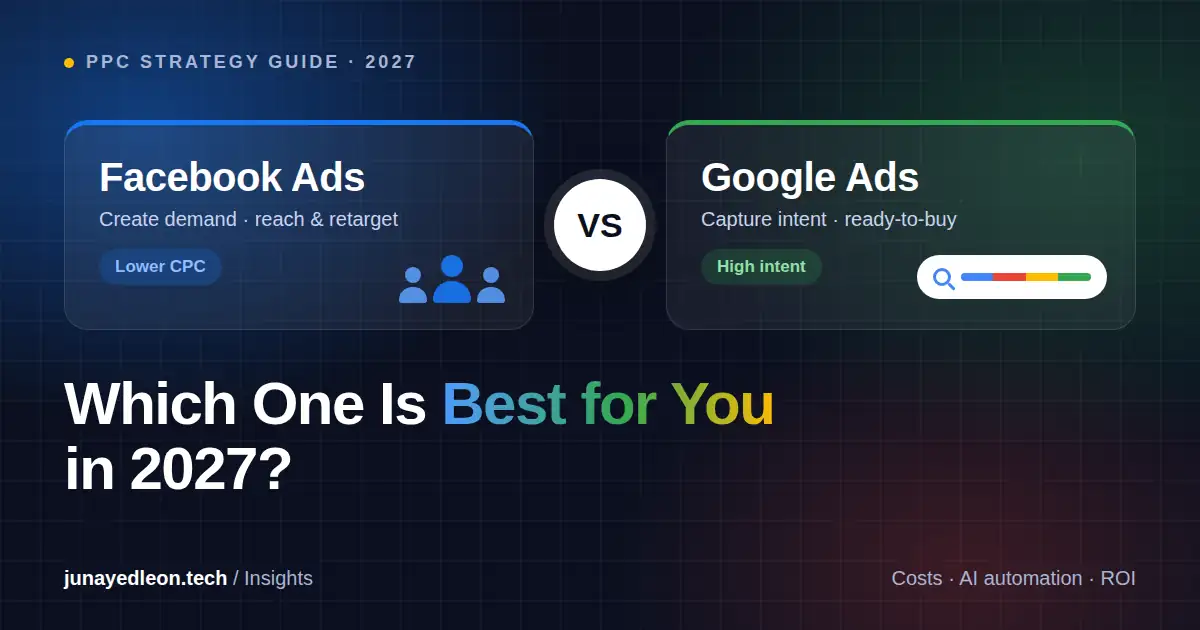
Facebook Ads vs Google Ads comes down to buyer intent. Choose Google Ads when people already search for what you sell and you need leads or sales fast. Choose Facebook Ads (Meta Ads) when you need to create demand, build an audience and sell visually at a lower cost per click. For most growing businesses in 2027, the best results come from using both: Meta to create demand, Google to capture it.
What Is the Core Difference Between Facebook Ads and Google Ads?
The biggest difference is intent. Both platforms sell attention, but they meet your buyer at completely different moments in the journey.
- Google Ads is demand capture. Your ad appears when someone actively searches for “emergency plumber near me” or “best CRM for startups.” The buyer has a problem and is looking for a solution right now.
- Facebook Ads is demand creation. Your ad appears while someone scrolls Facebook, Instagram, Threads or Reels. They weren’t looking for you, so your creative has to stop the scroll and spark interest.
Google answers demand that already exists. Meta creates demand that doesn’t exist yet. Pick the platform that matches where your customer is today.
Facebook Ads vs Google Ads: 2026 Benchmarks at a Glance
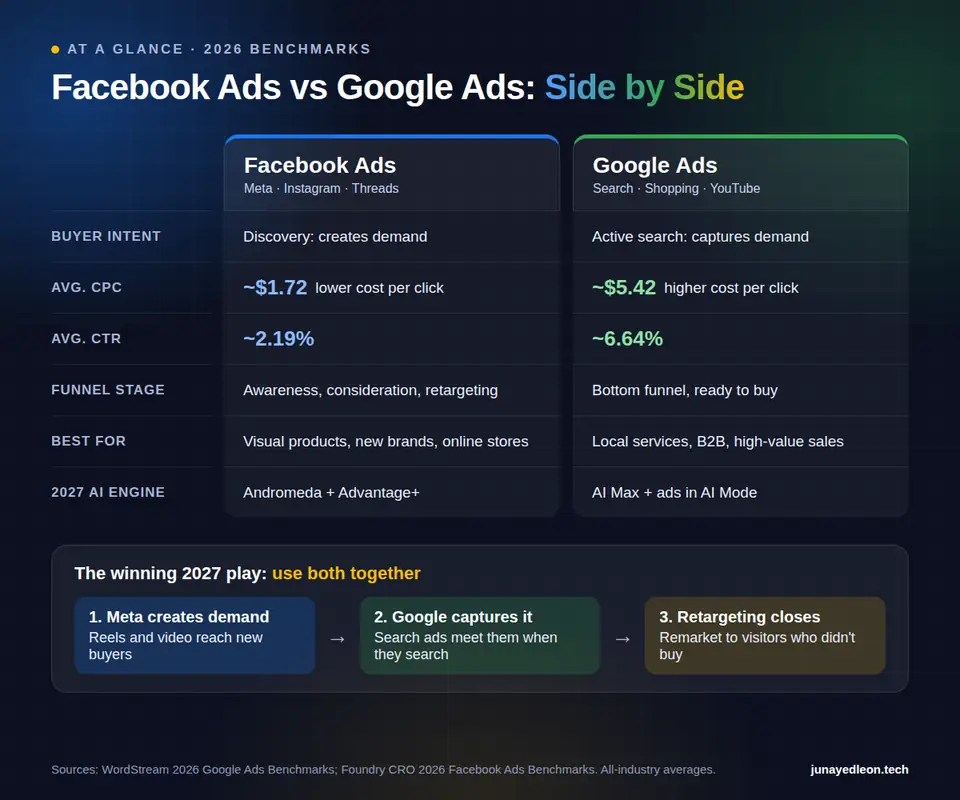
Recent all-industry averages give a useful starting point, though results vary by industry and country.
| Metric | Google Ads (Search) | Facebook / Meta Ads |
|---|---|---|
| Average CPC | ~$5.42 | ~$1.72 |
| Average CTR | ~6.64% | ~2.19% |
| Average conversion rate | ~8.18% | ~9.21% (reported, see note below) |
| Average cost per lead | ~$66.69 | Usually lower, varies by objective |
| Best funnel stage | Bottom (ready to buy) | Top and middle (awareness, consideration, retargeting) |
| Main targeting signal | Search query and intent | Creative, interests, behaviour and AI signals |
Sources: WordStream 2026 Google Ads Benchmarks; Foundry CRO 2026 Facebook Ads Benchmarks, which aggregate Triple Whale, WordStream, Databox and others.
Two trends stand out. On Google, WordStream reports that average cost per lead went down for the first time in five years, and conversion rates rose in most industries. On Meta, CPC rose about 11% and CPMs about 20% year over year, according to the same benchmark roundup.
Note on Meta conversion rates: Meta and Google measure conversions differently. Meta’s default attribution (7-day click, 1-day view) and its March 2026 reporting changes can make results look better than they are, so always compare platforms in your own analytics or CRM, not inside each ad manager.
Cheaper Clicks Do Not Mean Cheaper Customers
A $0.80 Facebook click looks five times better than a $4 Google click. Check cost per acquisition (CPA) instead:
- Google: $4.00 CPC ÷ 6% conversion rate = $66.67 per customer
- Facebook: $0.80 CPC ÷ 1.5% conversion rate = $53.33 per customer
Facebook still wins in this example, but by about 20%, not 400%. In high-intent niches like legal, medical or home services, Google often wins outright. Judge platforms by CPA, return on ad spend (ROAS) and customer lifetime value, never by CPC alone.
What’s Changing in 2026–2027 (and Why It Matters)
Both platforms are now run by AI. Knowing how that AI works is the new competitive edge.
1. Google Ads: AI Max, AI Mode and the End of Pure Keywords
- AI Max for Search is replacing Dynamic Search Ads. Google began automatic upgrades for automatically created assets and campaign-level broad match in September 2026, and remaining DSA campaigns are scheduled to upgrade from February 2027. AI Max uses search term matching, text customisation and final URL expansion. Google says campaigns using all three features see an average of 7% more conversions or conversion value at similar CPA/ROAS.
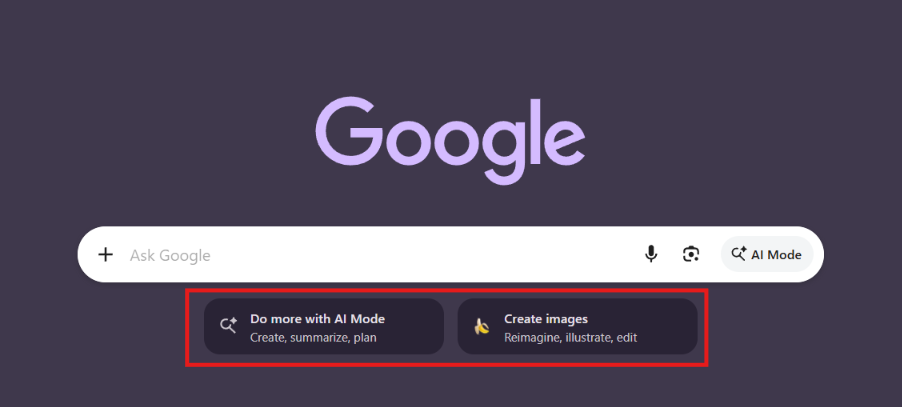
- Ads inside AI Mode and AI Overviews. At Google Marketing Live 2026, Google introduced Gemini-powered formats such as conversational ads and “highlighted answers” that place ads inside AI-generated recommendations. Eligibility runs through Performance Max and AI Max campaigns. For the organic side of this shift, read our guide to Google AI Mode and the future of SEO.
- What it means for you: In 2027, keywords are a starting signal, not the whole strategy. Your landing pages, product feed and first-party conversion data tell Google’s AI who to show your ads to.
2. Meta Ads: Andromeda, Advantage+ and Creative as Targeting
- Andromeda is Meta’s ad retrieval system, now applied across campaign types. It uses your creative itself as a targeting signal, matching ads to people based on the problem and message in the ad.
- Advantage+ now covers Sales, App and Leads campaigns (Advantage+ Shopping was renamed Advantage+ Sales in January 2026), pushing advertisers towards broad targeting and automated placements.
- Threads ads reached general availability, and early reports suggest lower CPMs than the Facebook Feed.
- What it means for you: Detailed interest targeting matters less every year. Winning on Meta in 2027 means producing a steady supply of varied creatives, each speaking to a specific pain point or buyer type. Our Meta creative hooks and Advantage+ playbook shows how to build that pipeline.
Not sure where your ad budget should go?
Get a free audit of your Google Ads and Meta Ads accounts, with a clear view of which platform is really bringing you customers.
When Google Ads Is the Better Choice
Pick Google Ads first if:
- People already search for your product or service. Local services, B2B software, legal, healthcare and repairs all fit.
- You need leads quickly. Search traffic converts faster because the intent already exists.
- Your product is not very visual. Accounting services or IT support are hard to sell in a scroll feed.
- You sell high-value or urgent solutions, where a higher CPC is easily covered by customer value.
When Facebook Ads Is the Better Choice
Pick Facebook and Instagram Ads first if:
- Your product is new, and nobody searches for it yet. You have to create the demand.
- Your product is visual or impulse-friendly. Fashion, beauty, food, gadgets, courses and home décor thrive on Meta.
- You have a smaller budget and want more reach and traffic per dollar to test offers.
- You want to build an audience for retargeting, email lists and long-term brand recall.
The Winning 2027 Strategy: Use Both Together
The strongest accounts don’t treat this as either/or. A simple full-funnel setup looks like this:
- Meta creates awareness. Short videos and Reels introduce your brand to a broad, AI-selected audience.
- Google captures the search. People who saw your ad later search your brand or category, and your Search ads meet them there.
- Retargeting closes the loop. Meta and Google Display or YouTube remarket to visitors who didn’t convert.
How to Split Your Budget Between Google and Meta
| Business Type | Google Ads | Meta Ads |
|---|---|---|
| Local service or high-intent business | About 70% | About 30% |
| E-commerce or visual product | About 40% (Shopping and Performance Max) | About 60% |
| Brand-new product or category | About 30% | About 70% until search demand grows |
Treat these as starting points and shift budget every month towards the platform with the lower real CPA.
4 Tips to Get Better Results on Either Platform
- Fix tracking first. Set up Google Analytics 4, enhanced conversions and Meta’s Conversions API. AI bidding is only as good as the data you feed it.
- Feed the algorithm enough conversions. Aim for at least 30 conversions per campaign per month so automated bidding can learn.
- Invest in creative variety. Test different hooks, formats and pain points, especially on Meta under Andromeda.
- Build fast, focused landing pages. Both platforms reward relevance and a smooth post-click experience. A good automated lead nurturing funnel then turns those clicks into customers.
Final Verdict: Facebook Ads or Google Ads in 2027?
In 2027, the question isn’t really “Facebook Ads vs Google Ads.” It’s “where is my customer in their buying journey?” If they’re already searching, meet them on Google. If they don’t know you exist yet, reach them on Meta. Start with the platform that matches your business, track real cost per customer, and scale into both as you grow.
Get More Customers From Every Ad Dollar
Let’s build a Google Ads and Meta Ads plan around your business, your budget and the customers you actually want.
Google AI Mode and the Future of SEO: What Changes Today?
Agentic AI in Study Abroad Marketing: Complete Guide

GEO vs SEO: Why Google Still Drives 34x More Traffic Than ChatGPT & How to Win Both in 2026